
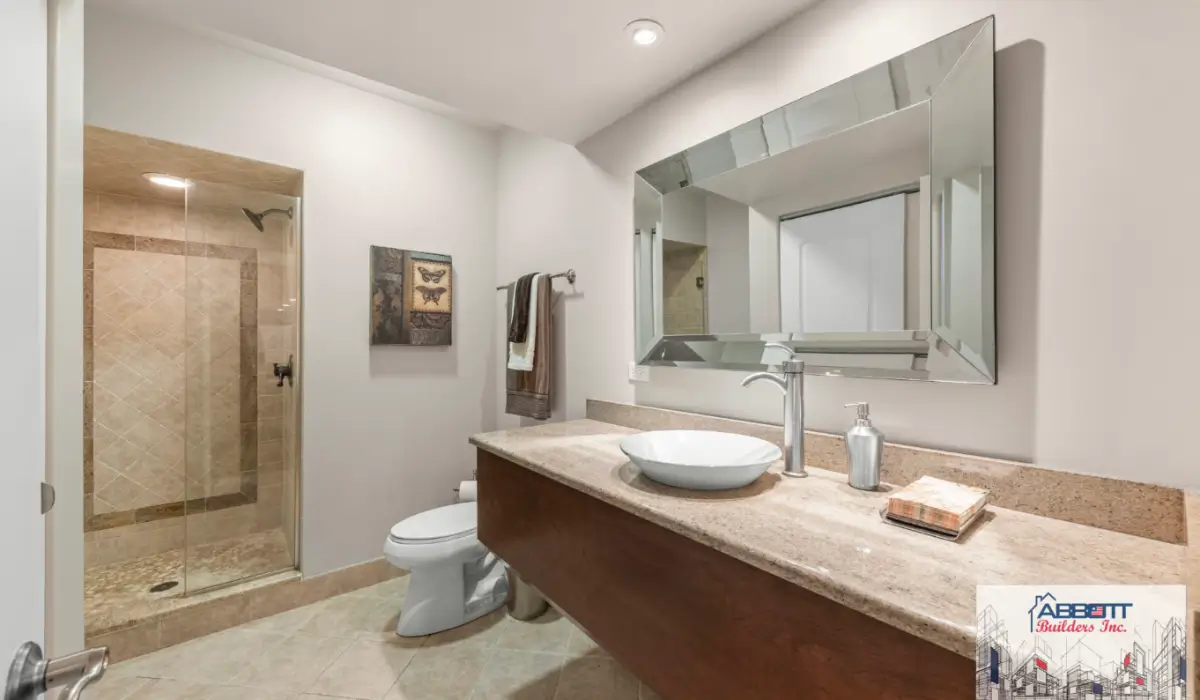
A bathroom remodel checklist helps you organize your budget, layout, materials, schedule, and contractor decisions before construction begins. Planning each step helps reduce unexpected costs, keeps the project moving, and creates a bathroom that fits your everyday routine.
We created this guide for first-time remodelers who want a practical path from the first idea to a finished bathroom. Abbott Builders Inc. brings more than 30 years of remodeling experience built on quality craftsmanship, clear communication, and dependable service.
Clear goals and early decisions help homeowners avoid rushed product choices, vague estimates, and schedule problems.
Our bathroom remodeling services support homeowners from planning and design to construction and the final review.
A successful bathroom remodel begins with a clear purpose. Defining your goals before requesting estimates or selecting products helps every later decision support the same result.
Many first-time remodelers save bathroom photos before deciding how the room needs to function. Those images become more useful when each one reflects a practical need, such as better storage, easier cleaning, safer access, or more comfortable daily use.
We organize early planning with a simple method called the Four D Check:
The Four D Check keeps every choice working toward the same goal. It also gives homeowners and contractors shared expectations before demolition.
Gathering inspiration remains useful during bathroom renovation planning. Save photos of vanities, showers, storage, lighting, flooring, and finishes, then add a short note explaining why each image matters.
A ranked priority list protects the most important parts of the project when costs or product choices change. It also prevents optional upgrades from taking money away from repairs or everyday needs.
Begin with the main reason for remodeling. Common goals include updating an older room, improving resale appeal, increasing storage, correcting moisture problems, or creating safer long-term access.
Group each idea into one of these categories:
This priority list also helps when reviewing contractor proposals or comparing product options. If pricing changes or an unexpected repair affects the budget, you can adjust optional upgrades while protecting the improvements that have the greatest impact on comfort, function, and long-term value.
This structure gives homeowners flexibility without weakening the main purpose of the remodel. Our aging-in-place bathroom design guide also shows how safety and comfort can fit naturally into a modern room.
A useful bathroom layout supports daily movement before finish selections begin. The vanity, toilet, shower, tub, storage, lighting, and door clearances should work together rather than compete for space.
What we often see is homeowners selecting fixtures before confirming how the room functions. A stylish vanity provides little value when drawers hit a door, or two people cannot move comfortably during busy mornings.
Review these layout decisions early:
Moving plumbing can improve function, but it also increases labor, materials, and project time. The change should solve a real problem, such as poor access or wasted floor space.
Storage and lighting deserve equal attention. Vanity drawers, shower niches, medicine cabinets, linen storage, and built-in organizers keep daily items easy to reach without covering the countertop.
Lighting works best in layers. Ceiling fixtures provide general brightness, vanity lights support grooming, and shower lighting reduces dark areas. Position vanity lights near eye level when possible to limit facial shadows.
Ventilation should be planned during this stage. ENERGY STAR ventilation guide explains how properly sized fans help manage moisture while using energy efficiently.
Choosing a qualified bathroom contractor affects planning, communication, scheduling, and construction quality. A detailed proposal often gives homeowners clearer information than the lowest estimate because it explains exactly what is included in the project.
Homeowners should request two to three written quotes before making a decision. One proposal may include demolition, permits, cleanup, and finish work, while another may leave several items out. Comparing the full scope of work makes it much easier to evaluate each estimate fairly.
Use the same checklist for every contractor:
The FTC home improvement scam guidance outlines practical steps for reviewing estimates, contracts, and payment terms before hiring a contractor.
A good proposal should answer questions before work starts. When comparing bathroom remodeling contractors near me, communication, organization, experience, and the complete project scope usually provide greater long-term value than price alone.
Abbott Builders Inc. was founded by Manny Bucur, a U.S. Marine Corps combat veteran with more than 30 years of remodeling experience. Our company background and values reflect his commitment to discipline, integrity, clear communication, and dependable craftsmanship.
Material choices affect appearance, installation, delivery timing, and the order in which specialists complete their work. Finalizing major products before demolition reduces delays caused by missing, damaged, or incorrect items.
Use one organized checklist instead of scattered notes, emails, or product screenshots:
| Item | What to Confirm |
|---|---|
| Floor and wall tile | Size, finish, quantity, and delivery date |
| Vanity and countertop | Measurements and installation needs |
| Faucets and shower fixtures | Finish, compatibility, and warranty |
| Lighting and mirrors | Placement and electrical needs |
| Paint colors | Final selection after tile and lighting |
This checklist helps homeowners and contractors review every major product before ordering, reducing the chance of missed selections or delivery problems that affect the project schedule.
Water use also matters when selecting faucets and shower fixtures. The EPA WaterSense bathroom faucets highlight how WaterSense-labeled products can reduce water use while maintaining reliable performance.
Before placing the final order, confirm product dimensions, finish selections, quantities, and delivery dates. Reviewing these details early helps prevent ordering mistakes that can delay installation or require replacement materials.
Homeowners balancing comfort and cost can also use our spa-style bathroom budget guide to compare practical upgrades with optional luxury features.
Abbott Builders Inc. recommends ordering custom vanities, specialty tile, and less common fixtures early. Each delivery should also be inspected for damage or incorrect measurements before installation begins.
A remodel timeline becomes easier to manage when homeowners understand which stages depend on earlier decisions. Product availability, inspections, hidden repairs, and approved project changes can all affect the final schedule.
Most bathroom remodels follow a similar sequence:
| Project Stage | Typical Time Estimate |
|---|---|
| Planning | 2–4 weeks |
| Design finalization | 1–2 weeks |
| Construction | 2–5 weeks |
These are planning ranges rather than guarantees. Every home is different, and permit approvals, specialty materials, or unexpected repairs may extend the schedule.
A change order is a written update to the agreed project scope or price. It may affect the schedule because additional labor, materials, or installation steps become necessary.
Weekly progress updates help homeowners understand completed work, upcoming decisions, and possible schedule adjustments before they become larger delays.
The same planning habits also support other remodeling projects. Our small kitchen transformation guide explains how organized planning helps improve efficiency and functionality in compact spaces.
Many remodeling problems begin with delayed decisions or unclear expectations. Addressing these issues during planning helps protect the budget and reduces unnecessary rework.
One of the most common mistakes is changing the design after plumbing, electrical work, or framing has already started. Even a small adjustment can affect labor, scheduling, and overall project costs.
Common mistakes include:
Proper ventilation helps protect paint, drywall, cabinetry, and finishes from moisture damage. Including the ventilation plan early supports better long-term performance and indoor comfort.
Durability matters just as much as appearance. Selecting products that are easy to clean, comfortable to use, and built for everyday life usually provides better long-term value than following short-lived design trends.
Small planning habits can make a noticeable difference throughout a remodeling project. Staying organized helps homeowners, contractors, and suppliers work from the same plan while reducing unnecessary delays.
Choosing one person in the household to make final decisions also helps keep communication clear. A consistent point of contact reduces mixed messages, keeps approvals organized, and allows the project to continue with fewer interruptions.
Keep these practices in mind:
Regular updates help resolve questions while the work remains easy to adjust. A short weekly review can cover completed work, upcoming tasks, material deliveries, and any open decisions.
Homeowners planning improvements beyond the bathroom can also review our additional remodeling services for ideas that support future projects throughout the home.
Planning a bathroom remodel often raises similar questions, especially for first-time homeowners. These answers address common concerns before construction begins.
Our common remodeling questions also explain project planning, communication, scheduling, and service expectations.
How early should planning begin?
One to two months usually provides enough time to compare contractors, organize the budget, finalize product selections, and schedule deliveries.
Custom cabinetry, specialty tile, permits, or significant layout changes may require additional preparation time.
Should materials arrive before demolition?
Major products should be ordered early, and custom or hard-to-replace items should arrive before the project depends on them.
Vanities, tile, shower systems, fixtures, and lighting should also be checked for damage or incorrect measurements before installation.
Is moving plumbing worth the added cost?
Moving plumbing can make sense when the current layout limits storage, comfort, or everyday use.
Keeping fixtures in their existing locations often saves labor and project time, so relocation should solve a clear functional problem.
A well-prepared Bathroom Remodel Checklist gives every remodeling decision a clear purpose, helping reduce unnecessary delays and costly changes before construction begins. Abbott Builders Inc. brings more than 30 years of remodeling experience, clear communication, and careful coordination to every bathroom renovation.
Homeowners ready to turn their remodeling plans into reality can schedule a bathroom consultation whenever the timing is right.
If you prefer to talk with our team first, call (630) 935-7722. We’re happy to answer your questions and explain what the planning process looks like before construction begins.