
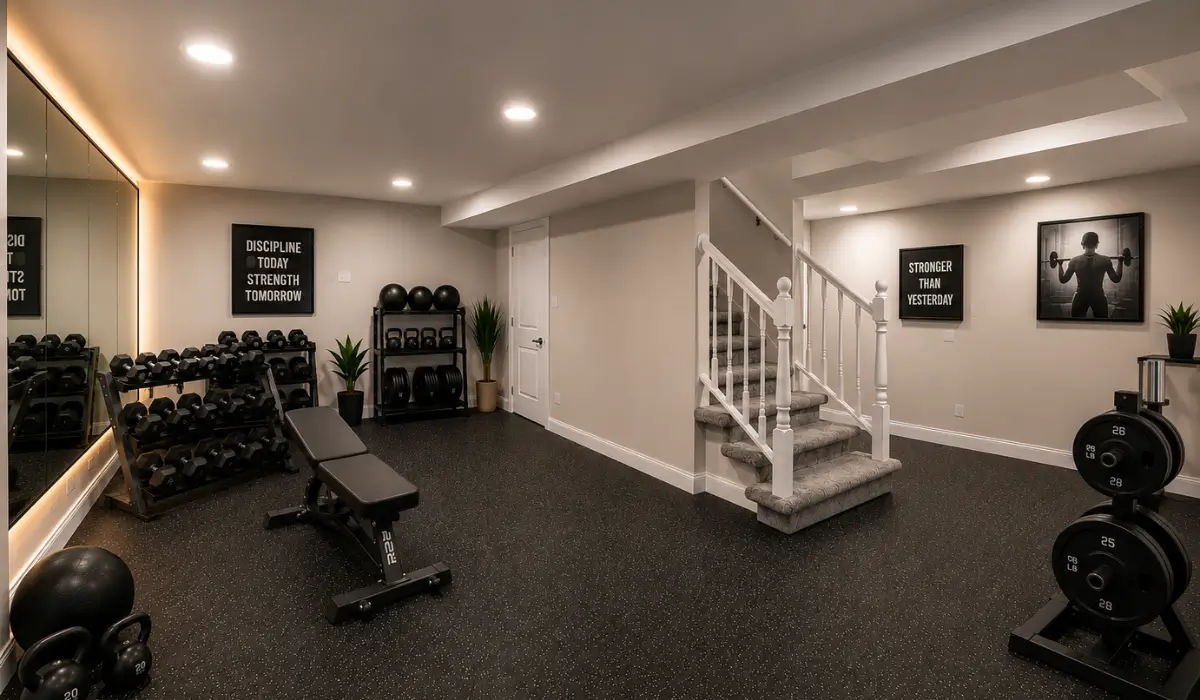
Why drive to the gym, wait in line for machines, or lose motivation in bad weather? With the right basement remodel, your Home Fitness Room can be private, customized, and just steps away.
A dedicated workout space can turn underused square footage into a practical area that supports your daily routine. Better flooring, airflow, lighting, and layout planning can make the room easier to use year-round.
Abbott Builders helps homeowners create basement spaces built around consistent workout routines, whether that means strength training, yoga, cardio sessions, or recovery-focused wellness features.
Short on time? Focus first on moisture protection, ceiling height, airflow, and flooring durability. Those four areas usually determine whether the basement is ready for a gym remodel or needs upgrades first.
Basements naturally support workout routines better than many other parts of the home. Cooler temperatures help during cardio and strength training, especially when compared to garages or upstairs rooms that trap heat.
A finished basement also gives homeowners more flexibility when comparing practical basement space ideas. Stretching areas, cardio equipment, free weights, and storage can fit comfortably without taking over bedrooms or shared living areas.
A quieter, lower-level space supports better focus and fewer distractions. Workout noise stays separated from bedrooms and living spaces, making it easier to stay consistent without disrupting the household.
Privacy also helps many homeowners train more consistently. The equipment is always available, there is no commute, and the weather no longer affects workout schedules.
Many homeowners exploring basement remodeling often start by reviewing basement remodeling options before planning equipment placement or storage.
The most successful basement gyms are planned around comfort, safety, and long-term usability before finishes or equipment are selected.
Moisture protection should be addressed before flooring or equipment installation begins. Basements are more vulnerable to humidity and water intrusion than upper floors, and flooring installed over damp concrete can create odors, mold issues, and damaged materials.
The EPA recommends maintaining healthy indoor moisture levels to reduce mold risks and improve indoor air quality.
Ceiling height also matters. Most homeowners prefer at least seven feet of clearance for overhead exercises, mounted equipment, and unrestricted movement.
Workout rooms become easier to use when the layout supports different activities without making the space feel crowded.
Common workout zones include:
Organized zones also leave room for future upgrades instead of filling every square foot immediately.
Poor airflow can make a basement gym uncomfortable quickly. Dedicated HVAC improvements, mini-split systems, or mounted fans usually perform better than temporary cooling solutions.
Electrical planning is equally important because treadmills, TVs, lighting, speakers, and charging stations often require more outlets than homeowners expect.
Flooring affects comfort, safety, noise control, and equipment protection. Rubber flooring remains popular for strength training, while foam tiles and vinyl flooring work well for stretching or multi-purpose workout areas.
The National Academy of Sports Medicine recommends flooring that supports both shock absorption and stability.
Modern home gym ideas are becoming more practical and personalized instead of copying commercial gyms. Many homeowners now prioritize comfort, organization, and convenience over oversized equipment setups.
Popular upgrades include:
These upgrades can improve both functionality and day-to-day usability.
Large mirrors make smaller workout areas feel more open while helping homeowners monitor exercise form more effectively.
A cluttered workout space becomes frustrating quickly. Built-in shelves, vertical racks, and wall-mounted storage help keep equipment accessible without taking over the room.
Many homeowners now rely on streaming fitness programs instead of traditional gym memberships. Mounted TVs and smart fitness systems make it easier to follow guided workouts from home.
Reliable internet access and organized cable management should be planned early so the room stays clean and functional after installation.
Some homeowners want more than a simple exercise area. A basement gym can also support recovery, comfort, and wellness when the layout includes upgraded features.
Weights, treadmills, and cardio equipment can create vibration throughout the home. Soundproofing insulation helps reduce disruption between floors, especially during early morning or late-night workouts.
Cold basement floors can make winter workouts uncomfortable. Radiant heating systems help maintain a more comfortable environment throughout the year.
Layered lighting helps the room feel more comfortable and easier to use. Brighter task lighting works well near workout equipment, while softer lighting supports stretching or recovery areas.
A nearby bathroom adds convenience, especially for homeowners using the gym daily. Some remodels also include steam showers or wellness-focused upgrades as part of a larger custom basement renovation.
Many homeowners searching for basement renovation near me realize the project involves more than equipment placement alone. Layout planning, airflow, moisture protection, and storage all affect how functional the room feels after construction is complete.
Early planning also helps prevent expensive layout changes later in the remodel process.
The total cost depends on the condition of the basement, the amount of remodeling involved, and the level of customization included in the final design.
| Remodel Level | Typical Cost Range | Common Features |
|---|---|---|
| Basic Setup | $3,000-$8,000 | Flooring, mirrors, lighting updates |
| Mid-Range Remodel | $10,000-$25,000 | Electrical work, finished walls, custom flooring, storage, ventilation |
| Luxury Buildout | $30,000+ | Lighting upgrades, ventilation systems, finished walls, media features, spa upgrades |
Many homeowners start with a smaller setup and expand over time as workout routines and equipment needs evolve. Homeowners comparing layouts in different service area details often prioritize different features depending on available square footage and lifestyle goals.
Many basement gym problems can be avoided when the remodel is planned correctly from the beginning.
Flooring should never be installed before moisture issues are resolved properly. Waterproofing systems and humidity control help protect both flooring materials and fitness equipment.
Low ceilings can limit overhead exercises, mounted equipment, and pull-up systems. Workout clearance matters just as much as meeting minimum building code requirements.
Workout spaces often grow over time as homeowners add TVs, upgraded lighting, speakers, or additional fitness equipment. Extra outlets installed during construction can prevent expensive changes later.
Poor ventilation can make a basement workout room feel damp and uncomfortable. Proper airflow improves comfort, supports indoor air quality, and helps protect equipment from excess humidity.
Homeowners who value Abbott Builders craftsmanship often appreciate how practical functionality stays part of the remodeling process from beginning to end.
A finished lower-level workout area can improve usable square footage and make the home more appealing to future buyers.
Rubber flooring remains one of the most durable options for weight training. Many homeowners also combine rubber flooring with vinyl or foam tiles depending on how the room will be used.
Yes, compact equipment, vertical storage, and multi-purpose layouts can help maximize smaller workout areas effectively.
Project timelines depend on the amount of finishing work, electrical upgrades, HVAC improvements, and custom features included in the remodel. Additional planning details are available inside the remodel planning FAQs.
A basement workout space works best when the room is designed around the way you actually train and move throughout the week. Some homeowners want a simple exercise area, while others prefer a complete wellness-focused retreat with recovery features and upgraded finishes.
The best basement fitness spaces are comfortable, organized, and easy to maintain. A well-planned layout can also make the room more enjoyable to use consistently over time.
Want a custom basement gym that works as hard as you do? Abbott Builders can help you turn underused space into a performance-ready fitness room designed around your workouts, comfort, and long-term goals. Review the project gallery, compare layout ideas, or call (630) 935-7722 to start planning your remodel.