

A damp basement after heavy rain usually means water is entering from outside, rising beneath the floor, or building up as indoor humidity. Waterproofing your basement starts with identifying the source because the right repair depends on how moisture enters the space.
Our Abbott Builders remodeling specialists help Naperville residents plan basement renovations with moisture concerns in mind. A musty odor, damp wall, or water stain may point to hidden issues behind drywall, flooring, or stored belongings, making an early evaluation an important step before remodeling work begins.
Basements in Naperville often experience moisture because several local conditions work together instead of creating a single problem. Soil type, seasonal weather, drainage patterns, and the age of a home all influence how water behaves around the foundation.
Clay-rich soil absorbs water slowly, allowing moisture to remain beside basement walls after heavy rain or snowmelt. Older homes may also have aging footing drains or exterior coatings that no longer direct water away as effectively as they once did, increasing the chance of seepage during extended wet periods.
Several conditions commonly contribute to basement moisture:
Some lower lots or properties near natural drainage paths experience higher groundwater after extended wet weather. Water below the surface can press against basement walls even when the yard appears dry, allowing moisture to move into the basement over time.
The USGS groundwater overview explains how groundwater moves through soil and rock. Dampness appearing soon after rainfall often points to drainage concerns, while moisture remaining during dry weather may indicate indoor humidity or a plumbing issue.
Our basement remodeling services outline how moisture concerns affect renovation planning before new finishes are installed.
Basement moisture usually leaves warning signs before a major leak develops. Recognizing these early indicators makes it easier to identify the likely source and address the problem before damage spreads.
We often see musty odors, bubbling drywall, peeling paint, damp storage boxes, and mold forming behind furniture placed against exterior walls. Each sign provides useful information because the location and timing of moisture often help narrow the possible cause.
| Warning Sign | Possible Cause | Helpful Next Step |
|---|---|---|
| Musty odor | High indoor humidity | Measure humidity levels |
| Water stain after rain | Exterior drainage concern | Inspect grading and downspouts |
| Bubbling drywall | Moisture behind the surface | Check nearby wall materials |
| Damp wall-floor joint | Groundwater beside the slab | Review drainage conditions |
| Mold behind furniture | Limited airflow and dampness | Inspect hidden wall surfaces |
White, powder-like residue on concrete is called efflorescence. It is not mold. Instead, it forms when water carries minerals through concrete or masonry and leaves them behind after the surface dries, confirming that moisture has moved through the material.
Moisture location also provides valuable clues. A stain beneath a basement window often points to drainage outside, while dampness around plumbing fixtures should be checked for leaks before exterior work is considered. Our poor basement finishing signs guide explains additional issues that finished walls and floors may conceal.
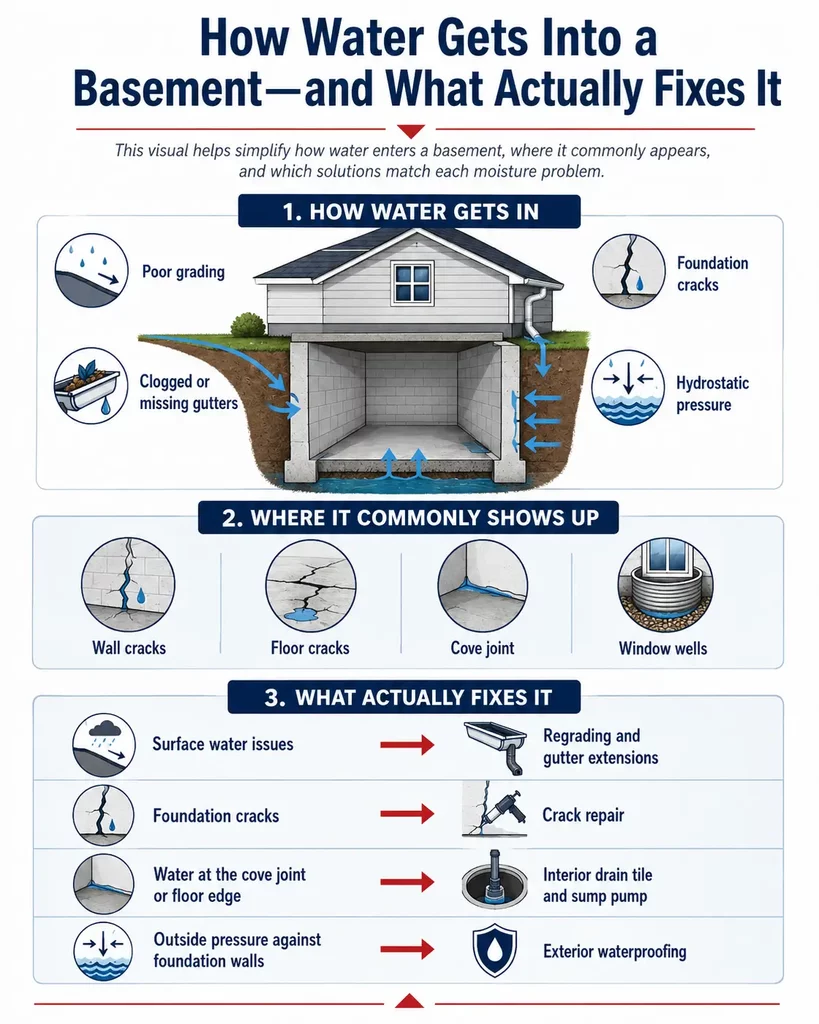
Different moisture problems can produce similar warning signs, but they rarely require the same repair. Waterproofing your basement begins with identifying where water comes from because the right repair should address the cause rather than only the visible damage.
A basement that stays dry during short storms but becomes damp after several days of rain may have saturated soil or weak exterior drainage. Moisture around a utility sink, water heater, or supply line may instead indicate a plumbing issue.
A complete inspection often includes:
A plumbing leak should not be mistaken for a drainage problem, and indoor humidity cannot explain water entering through a wall crack. Exterior runoff may require grading improvements or longer downspouts, while groundwater beneath the slab may call for an interior drainage system.
Water can damage flooring, drywall, insulation, trim, cabinetry, and stored belongings. Checking moisture conditions before remodeling helps prevent hidden problems from being covered by new finishes.
We review visible warning signs, discuss how the basement will be used, and identify conditions that may need attention before construction begins. Our basement fitness room guide shares practical planning ideas for comfortable, durable lower-level living spaces.
Interior systems manage water after it reaches the basement and help reduce damage to finished spaces. The right combination depends on whether the problem comes from groundwater, wall seepage, or indoor humidity because each condition requires a different approach.
Groundwater, seepage, and humidity affect basements in different ways. A drainage system collects and redirects water, while vapor barriers and dehumidifiers help reduce moisture that can affect finished walls, insulation, and indoor air quality.
| Interior Option | Best For | Limitation |
|---|---|---|
| sump pump installation | Removing collected groundwater | Requires power, testing, and maintenance |
| Interior drainage channel | Directing water toward a sump basin | Does not correct poor exterior grading |
| Vapor barrier | Reducing moisture near finished walls | Does not stop active water entry |
| Dehumidifier | Lowering indoor humidity | Does not repair leaks |
A sump pump moves collected water from a basin to an outlet pipe that carries it safely away from the house. Battery backup systems, high-water alarms, and smart leak sensors can provide earlier warning during power outages, pump failures, or unexpected leaks.
Vapor barriers help reduce moisture reaching insulation and finished walls after water issues have been addressed. The EPA mold and moisture guidance explains that drying wet materials and correcting the moisture source both help reduce mold growth.
Keeping water away from the outside of the house reduces pressure against basement walls and lowers the chance of seepage. Exterior drainage improvements work alongside interior systems because each solution manages a different part of the moisture problem.
Overflowing gutters, short downspouts, or poor grading often allow water to collect beside the foundation. Clay-rich soil drains slowly, so moisture may remain against basement walls long after rain has stopped.
Helpful exterior improvements include:
Exterior sealing helps reduce moisture moving through basement walls after older coatings begin to wear. Sealing alone rarely solves the problem when drainage still allows water to collect beside the foundation, so both conditions should be evaluated together.
Visible wall movement, widening cracks, or uneven settlement deserve professional attention because they may indicate structural concerns rather than ordinary moisture issues. Abbott Builders Inc. was founded by Manny Bucur, a U.S. Marine Corps combat veteran whose more than 30 years of remodeling experience continue to shape our practical, client-focused approach.
The FEMA flood safety guidance explains how lot elevation, drainage paths, nearby waterways, and regular property maintenance can influence flooding during periods of heavy rainfall.
Some repairs improve appearance without fixing the reason moisture entered the basement. Long-term results begin with identifying the source because covering visible damage rarely prevents moisture from returning.
A wall that remains dry after cleaning may only need cosmetic repairs, while a stain that reappears after every storm usually points to a condition that still needs attention. Watching when moisture returns often provides valuable information during the inspection process.
DIY sealants may help with a dry, stable crack after drainage concerns have already been corrected. They are much less effective when soil remains saturated or water pressure continues pushing moisture against the wall.
Effective basement waterproofing focuses on correcting the source instead of hiding visible damage. Moisture patterns, weather conditions, and where dampness appears often provide the information needed to recommend the most appropriate repair.
Finishing work should begin only after the basement remains consistently dry. Flooring, drywall, insulation, trim, and cabinetry perform better when moisture concerns have been resolved and the repair has proven effective.
Hidden moisture beneath finished materials can damage flooring, create unpleasant odors, and require completed work to be removed later. Confirming that repairs are working before construction begins helps reduce unnecessary costs while protecting new materials.
A practical sequence includes:
A finished basement may become a family room, guest suite, office, or hobby area. Planning the layout after moisture concerns have been addressed helps support better long-term performance and reduces the chance of future repairs.
Our spa bathroom budget guide provides additional planning ideas for budgeting, finishes, and renovation decisions that also apply to other interior remodeling projects.
Project costs vary because moisture problems have different causes and repair methods. Basement size, drainage design, site conditions, permits, and material choices all influence the final project cost.
A grading problem may cost far less to correct than an interior drainage issue, even when both produce similar water stains. A thorough inspection helps identify the actual source so recommendations are based on the condition of the basement instead of the visible symptoms.
| Solution | Estimated Cost* |
|---|---|
| Sump pump installation | $1,500–$4,000 |
| Interior drainage system | $3,000–$10,000 |
| foundation repair | $5,000–$15,000+ |
Planning ranges only. Actual costs depend on basement size, local labor, permits, site conditions, materials, and the work required.
A written proposal should clearly explain the scope of work, materials, exclusions, and conditions that may influence pricing. Abbott Builders reviews moisture concerns alongside renovation goals so recommended repairs and optional improvements remain easy to understand.
Recurring water, changing cracks, repeated mold, or plans for a finished living area often justify a professional evaluation. Waiting may allow moisture to affect more materials and increase repair costs.
Professional guidance becomes valuable when:
People searching for basement remodeling near me are often comparing renovation ideas while addressing existing moisture concerns. Our complete remodeling services reflect how basement work can connect with broader home improvements.
Clear planning helps define project scope, scheduling, and responsibilities before construction begins.
Our company background documents Manny Bucur’s experience, leadership, and the values behind our veteran-owned business.
Does every damp basement need a full waterproofing system?
No. Condensation, plumbing leaks, runoff, and groundwater need different responses. Weather notes, photos, and moisture locations can help narrow the cause.
Can waterproofing prevent all mold?
No system can guarantee that mold will never return. Plumbing leaks, poor airflow, wet storage, and ongoing moisture control still require attention.
Our remodeling FAQ resource provides supporting information about project planning, preparation, and common renovation questions.
Should waterproofing happen before remodeling?
Yes. The basement should remain dry long enough to show that the selected repair is working before finished materials cover the area.
Does Chicago weather increase moisture risks?
Heavy rain, snowmelt, humid summers, and freeze-thaw cycles can affect soil, drains, walls, and indoor humidity. Lot slope, nearby waterways, and maintenance also shape local risk.
Abbott Builders helps Naperville residents plan basement remodels around dry, dependable conditions. Our team brings more than 30 years of remodeling experience to projects built on clear priorities and honest guidance.
Schedule your basement consultation to discuss your project and current basement conditions, or call 630-935-7722 for practical guidance tailored to your basement.